








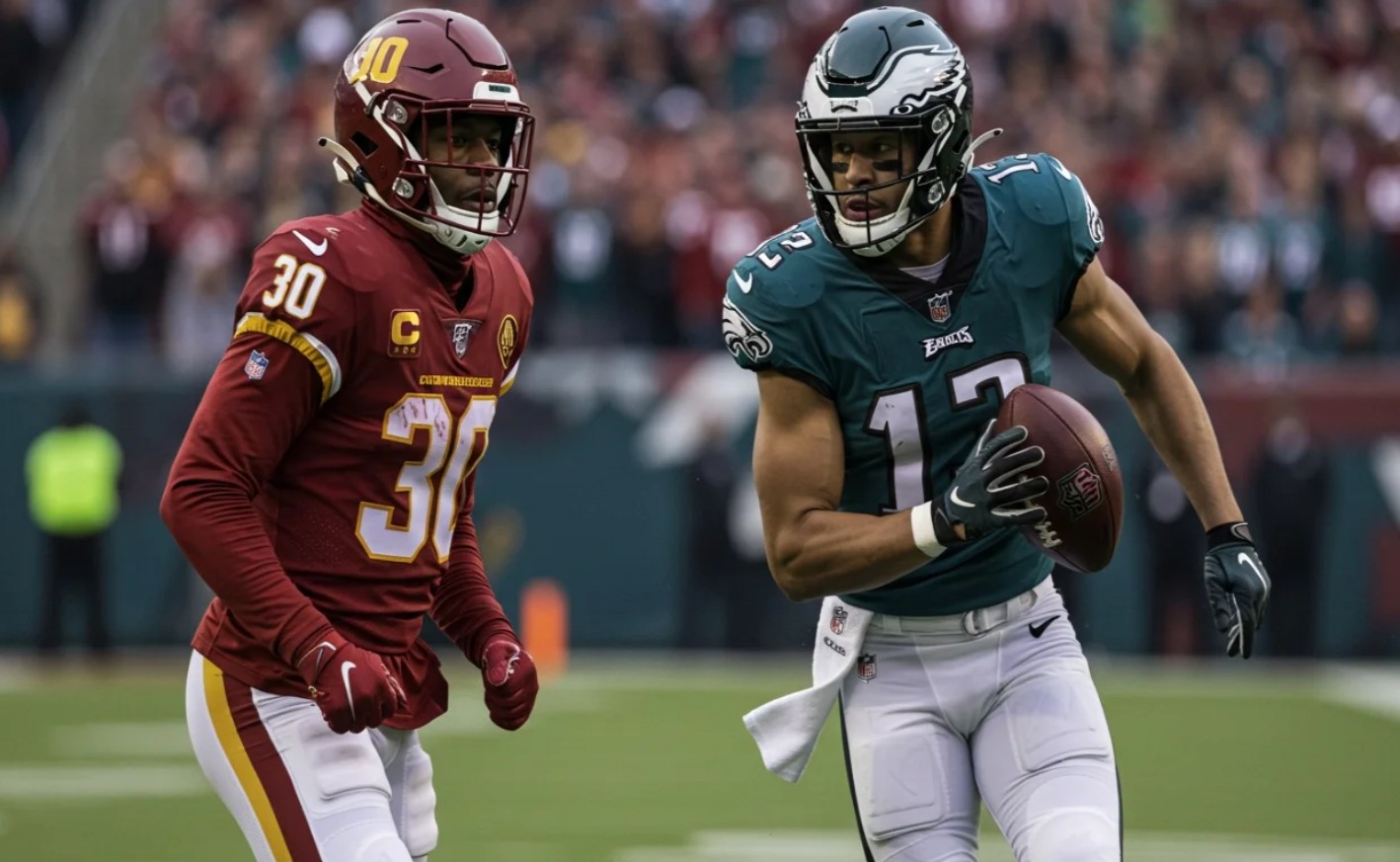
Philadelphia Eagles vs Washington Commanders Match Player Stats
The Philadelphia Eagles vs Washington Commanders match player stats rivalry remains one of the most compelling storylines in the NFC East. Every season, these games showcase physical football, explosive offensive moments, and strategic battles between two franchises built on history, pride, and passionate fan bases. In this comprehensive guide, we break down everything you need to know about Eagles vs Commanders performances, including quarterback efficiency, running game impact, defensive pressure, secondary matchups, coaching tendencies, and momentum-shifting plays.
As an NFC East showdown, the matchups between the Philadelphia Eagles and Washington Commanders never fail to generate national attention. Each contest carries playoff implications, divisional intensity, and individual player matchups that significantly influence the final outcome. This article delivers a deep, authoritative, SEO-friendly analysis that reflects real football knowledge and prioritizes clarity, accuracy, and helpfulness.
The Historic Rivalry Between the Eagles and Commanders
Few divisions in football offer rivalries as storied as the NFC East, and the clashes between Philadelphia and Washington are among the most memorable. From iconic defensive battles in the 1980s to high-scoring modern shootouts, each season introduces new storylines and standout performances.
The rivalry has evolved through multiple eras of quarterbacks, coaching philosophies, and roster overhauls. Yet one constant remains: the outcome often hinges on individual player stats, situational execution, and the ability of stars to elevate their team in crucial moments.
The Philadelphia Eagles vs Washington Commanders match player stats reveal trends that help explain why these games feel unpredictable yet consistently competitive.
Quarterback Performance: The Deciding Factor in Most Matchups
Quarterback efficiency almost always dictates the flow of Eagles–Commanders games. These matchups frequently feature aggressive blitz schemes, disguised coverages, and third-down pressure designed to disrupt rhythm and force hurried throws.
Eagles Quarterback Tendencies
The Eagles’ offense traditionally revolves around mobility, RPO concepts, and vertical passing threats. Their quarterback often thrives when extending plays outside the pocket, creating opportunities for chunk plays and exploiting mismatches in Washington’s secondary.
Analytically, Philadelphia quarterbacks tend to produce higher yards per attempt in divisional games, particularly when the offensive line controls the interior pass rush. The Commanders’ defensive front has historically been a challenge, making quarterback decision-making even more crucial.
Commanders Quarterback Outlook
Washington’s quarterbacks typically rely on quick reads, intermediate routes, and timing-based concepts designed to counter Philadelphia’s defensive pressure. When protected well, the Commanders have shown the ability to attack the seams and exploit soft spots in zone coverage.
The key statistical indicators for Washington usually include completion percentage under pressure, turnover avoidance, and red-zone efficiency. Games often shift depending on the quarterback’s ability to avoid sacks and stay disciplined in the face of Philadelphia’s edge rush.
Running Game Impact: Establishing Momentum and Controlling the Clock
No Eagles–Commanders analysis is complete without evaluating the ground game. Historically, matchups between these teams swing based on which offense establishes physicality early.
Eagles Rushing Attack
The Eagles’ rushing system generally emphasizes power concepts, zone-reads, and counters that take advantage of athletic linemen. Philadelphia often ranks high in rushing yards after contact, a stat that becomes especially meaningful in divisional games where defensive intensity peaks.
Success in the running game opens play-action opportunities, which dramatically improves the quarterback’s stats and offensive efficiency.
Commanders Ground Game
Washington’s run game tends to excel when they maintain balanced play-calling. Their style often includes north-south runs, misdirection, and screen game extensions that serve to slow down Philadelphia’s pass rush.
Player stats for the Commanders frequently show higher yards per carry in games where they set the tone early and control tempo. However, when the run game stalls, Washington’s offense sometimes struggles to sustain drives against Philadelphia’s aggressive defensive front.
Also Read: Baltimore Orioles vs San Francisco Giants Match Player Stats
Wide Receiver and Tight End Production
Passing-game production is one of the most critical areas of analysis in the Philadelphia Eagles vs Washington Commanders match player stats.
Eagles Receiving Corps
Philadelphia often features a top-tier wide receiver duo capable of winning contested catches, generating explosive plays, and contributing in the red zone. Their performance against Washington’s secondary frequently dictates the pace of the game.
Target share, yards after catch, and third-down conversions are key metrics illustrating their impact. The Eagles’ tight end also plays a significant role in moving the chains, especially against Washington’s linebackers.
Commanders Wide Receivers
Washington typically fields versatile receivers who excel in route running and separation. Against Philadelphia’s defense, success often hinges on quick-hit plays and exploiting matchups against slot defenders or safeties.
Tight end production can also swing the game, particularly on seam routes and play-action designs.
Defensive Pressure and Pass Rush Analysis
Both teams traditionally boast strong defensive fronts, making the pass rush a central storyline in every matchup.
Philadelphia Eagles Defensive Front

The Eagles have long been known for generating pressure with minimal blitzing, relying on dominant edge rushers and interior linemen. Their player stats often include high quarterback hits, pressures, and sacks in divisional games.
The ripple effect is enormous: hurried throws lead to interceptions, batted passes, and disrupted drives.
Commanders Pass Rush
Washington’s defensive identity frequently centers on the strength of their front line. When healthy and functioning cohesively, the Commanders’ pass rush can impact games even against elite offensive lines.
Their stats often include strong pressure rates, forcing Philadelphia’s quarterback to expedite reads and check down more often than usual.
Secondary Matchups and Coverage Breakdown
The success of each team’s defensive backs often determines whether the game becomes a defensive battle or an offensive shootout.
Eagles Secondary Overview
Philadelphia’s coverage schemes blend zone concepts with occasional man-to-man matchups. Their cornerbacks’ ability to handle Washington’s route technicians is essential in limiting explosive plays.
Key stats typically include passes defended, completion percentage allowed, and limiting yards after catch.
Commanders Secondary Outlook
Washington’s secondary performance tends to fluctuate depending on communication, alignment, and overall discipline. When functioning effectively, they can neutralize Philadelphia’s biggest weapons by mixing coverages and disguising pre-snap looks.
Their ability to create turnovers is usually one of the most important statistical differentiators in these matchups.
Also Read: Male Muscle Shirts for Modern Men
Coaching Strategies and Play-Calling Tendencies
Coaching strategy plays a massive role in shaping the player stats between the Philadelphia Eagles and Washington Commanders.
The Eagles typically lean into analytically driven decisions—aggressive fourth-down attempts, RPO utilization, and tempo control. Washington prioritizes adaptability, often adjusting mid-game to counter Philadelphia’s strengths.
Play-calling balance, situational awareness, and clock management all contribute to the statistical outcomes of individual players and the overall direction of the game.
Red Zone Efficiency: The Stat That Wins Games
Red zone performance consistently appears in data analysis as a major predictor of the Eagles–Commanders game results. Both teams rely on creativity inside the 20-yard line.
Philadelphia’s red zone success often comes from read-option dynamics, back-shoulder throws, and tight end utilization. Washington’s red zone efficiency typically hinges on disciplined reads, strong run blocking, and exploiting mismatches.
The team that scores touchdowns instead of field goals tends to emerge victorious, a trend reinforced across years of divisional play.
Turnover Battle: The Ultimate Deciding Metric
When reviewing Philadelphia Eagles vs Washington Commanders match player stats, the turnover margin stands out more than any other category. The history of this rivalry shows a clear pattern: the team with fewer turnovers wins a high percentage of the time.
Interceptions, forced fumbles, and recovery success frequently define momentum swings. Quarterback ball security and defensive opportunism are among the most impactful elements in shaping the narrative of each game.
Special Teams Contributions and Hidden Yardage
Special teams rarely receive attention until they become a deciding factor. Field position, kicking accuracy, punt coverage, and return yardage all shape the statistical profile of this matchup.
Philadelphia often excels in field position control, while Washington occasionally produces breakout return performances that alter game flow.
Special teams stats may not dominate headlines, but they almost always influence the outcome more than casual observers realize.
Conclusion
The Philadelphia Eagles vs Washington Commanders match player stats reveal a rivalry built on physicality, strategic depth, and star-driven performances. Quarterbacks often dictate the narrative, but running backs, receivers, pass rushers, and secondary players all contribute to a multilayered statistical story.
By understanding quarterback efficiency, rushing productivity, defensive pressure, secondary matchups, and turnover tendencies, football fans can better appreciate the intricacies of this NFC East showdown. Each season’s matchups bring new dynamics, emerging stars, and fresh tactical wrinkles, but the core principles of this rivalry remain the same: execution, discipline, and standout individual performances decide the outcome.
The Eagles and Commanders continue to write new chapters in one of the NFL’s most competitive rivalries, and the player stats provide a detailed roadmap of how each contest unfolds.
FAQs
What makes Eagles vs Commanders games so competitive?
Divisional familiarity, physical play, and coaching adjustments make these matchups intense and unpredictable.
Which player stats matter most in this rivalry?
Quarterback efficiency, pass rush pressure, turnover margin, and red zone scoring tend to determine the outcome.
Do the Eagles or Commanders typically perform better in divisional games?
Historically, both teams have traded wins depending on roster strength and coaching direction in a given season.




Post Comment